Press
Seen in the press.
Articles, reviews, and press kit.
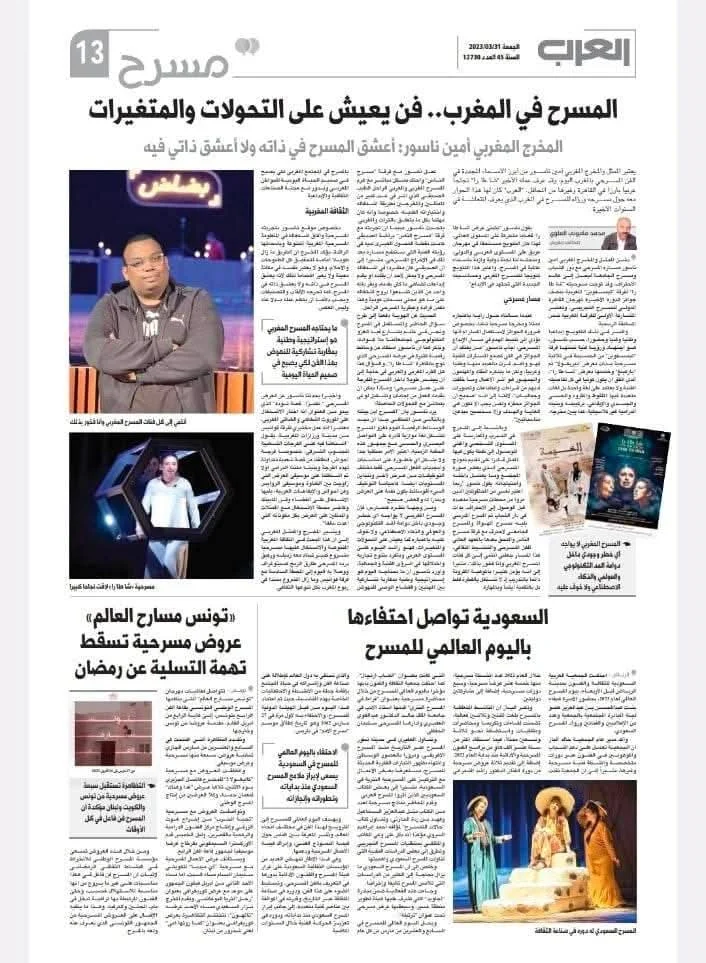
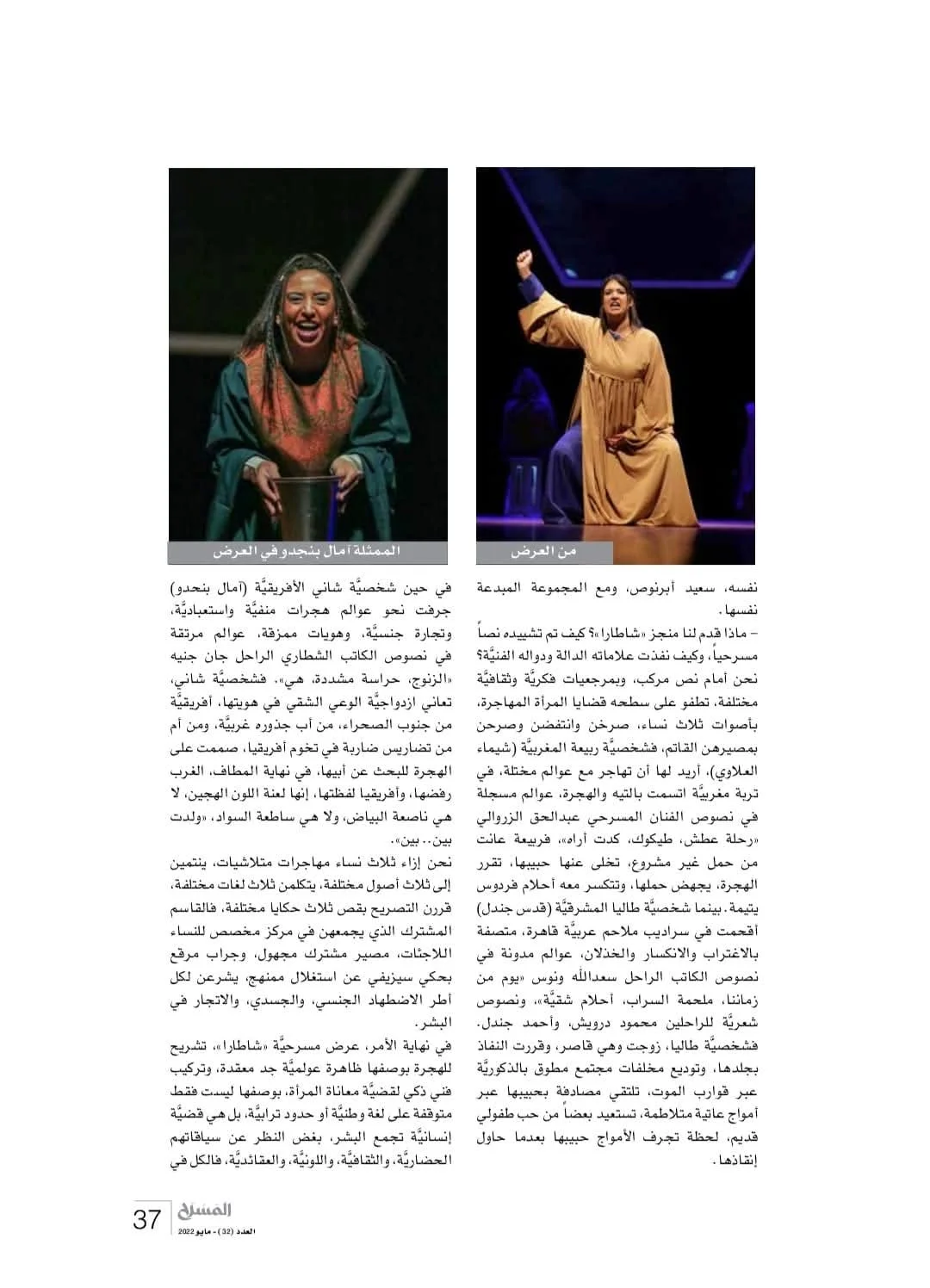
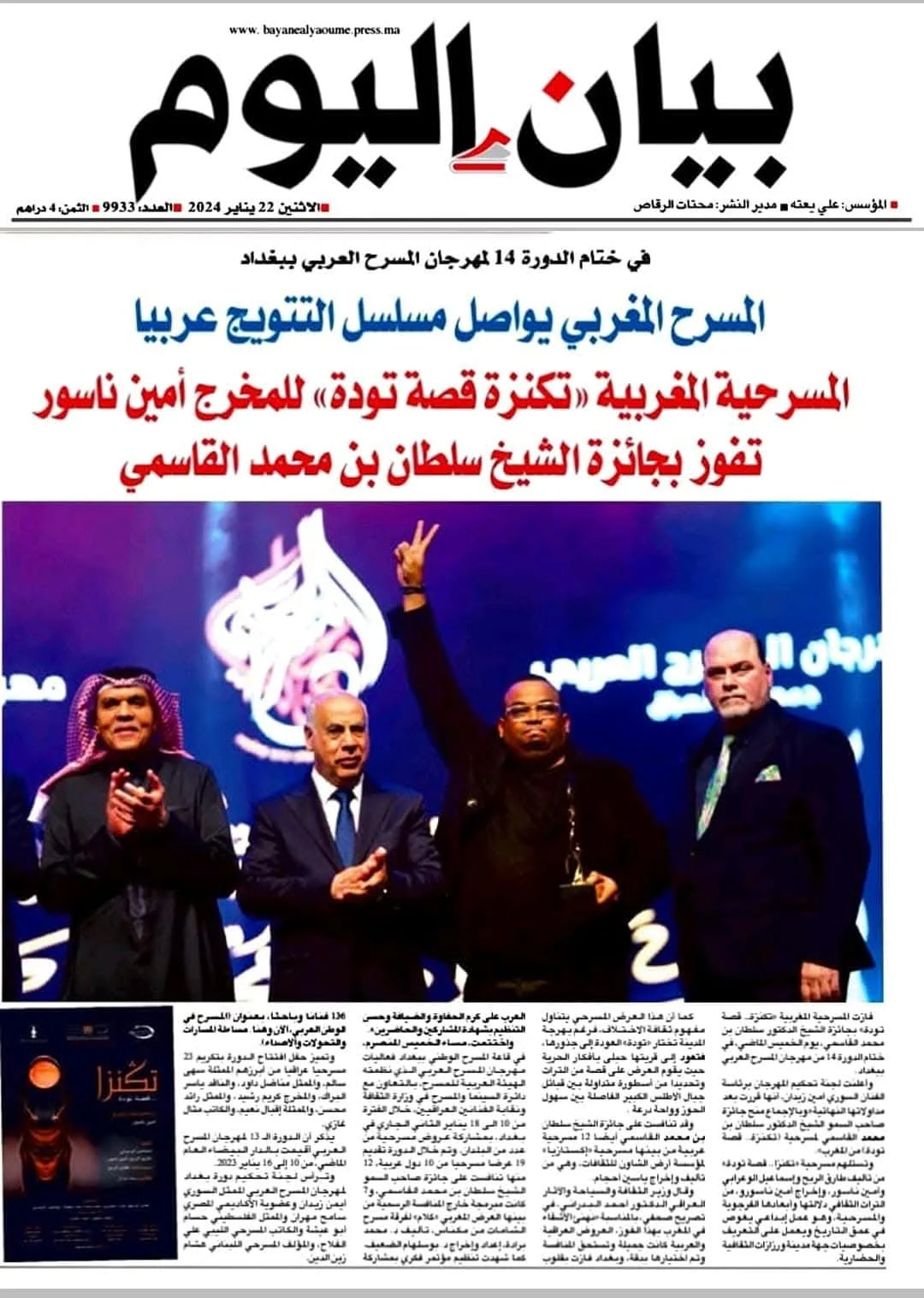
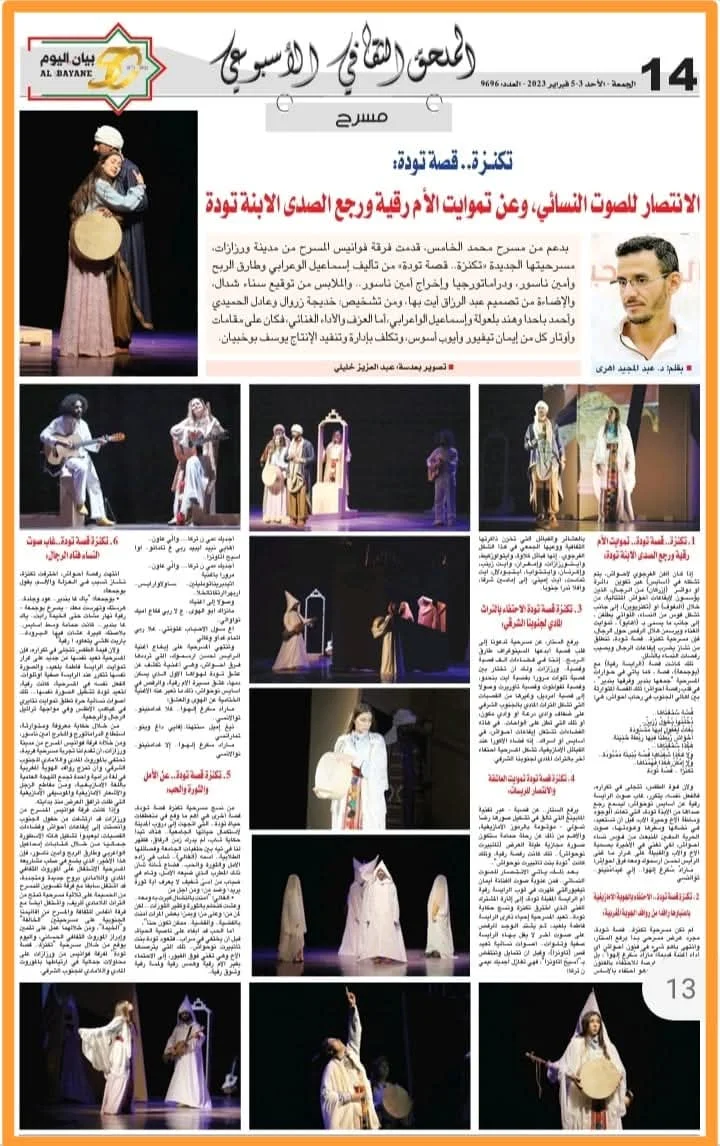
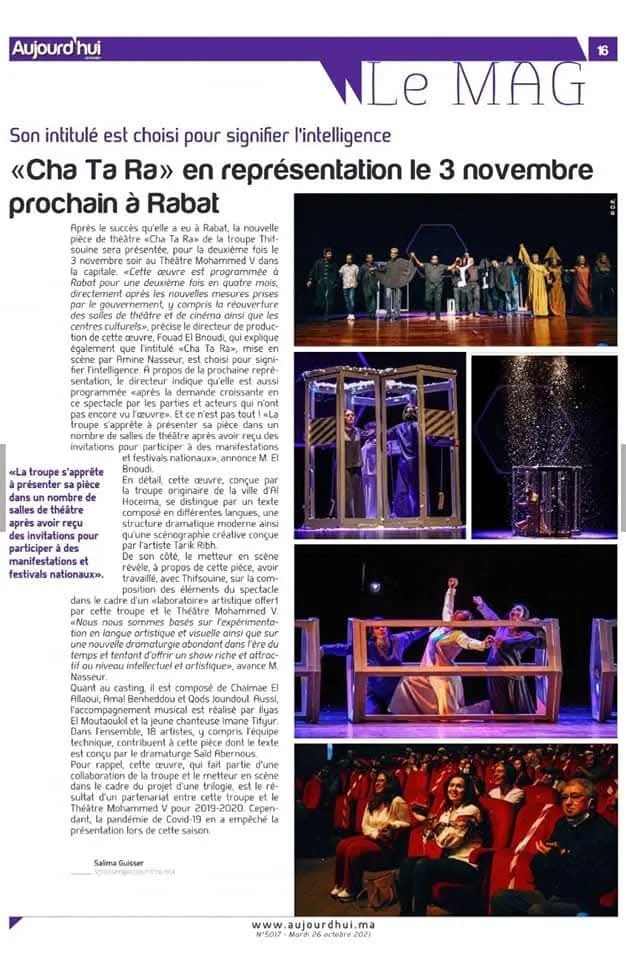
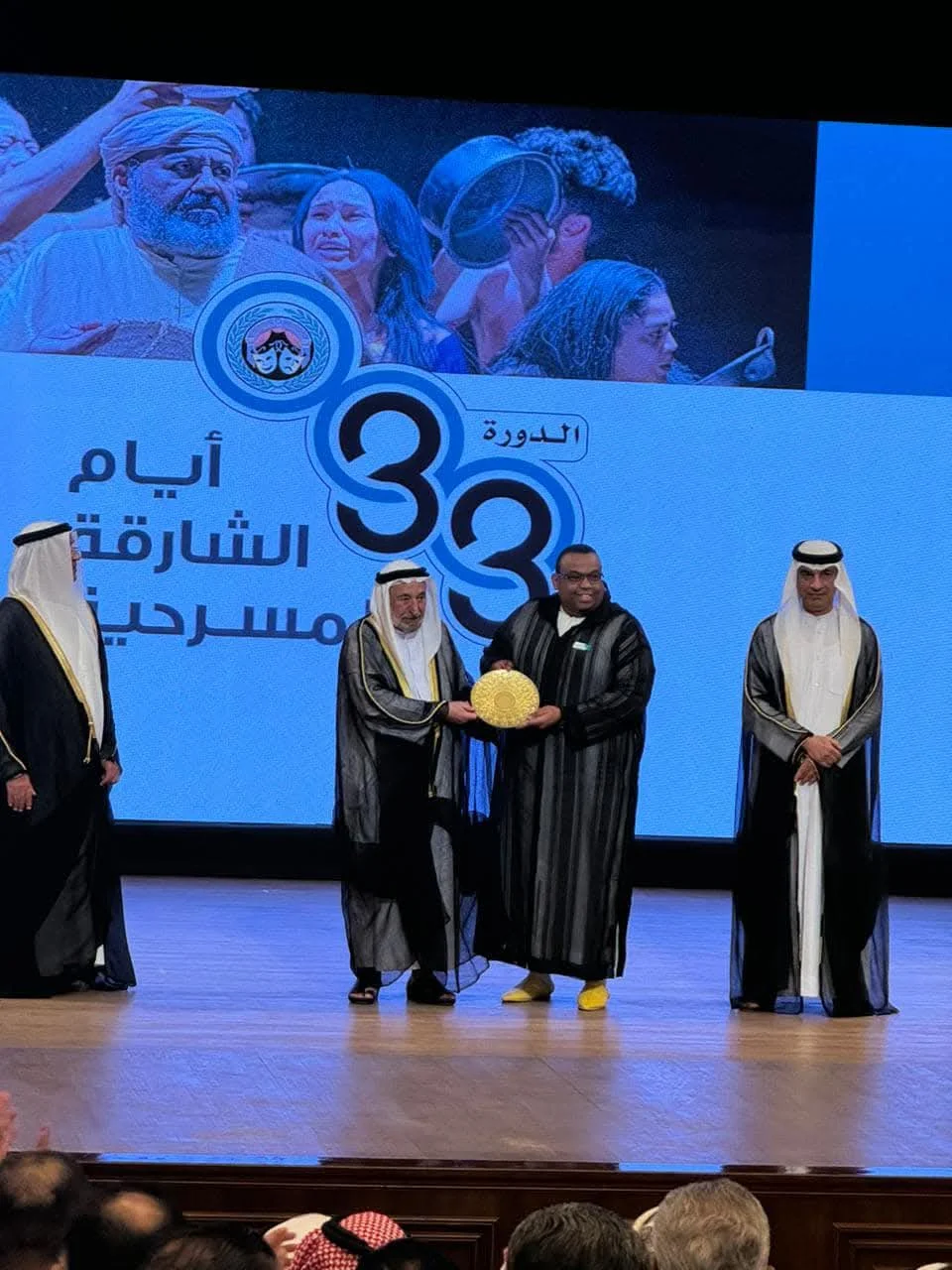
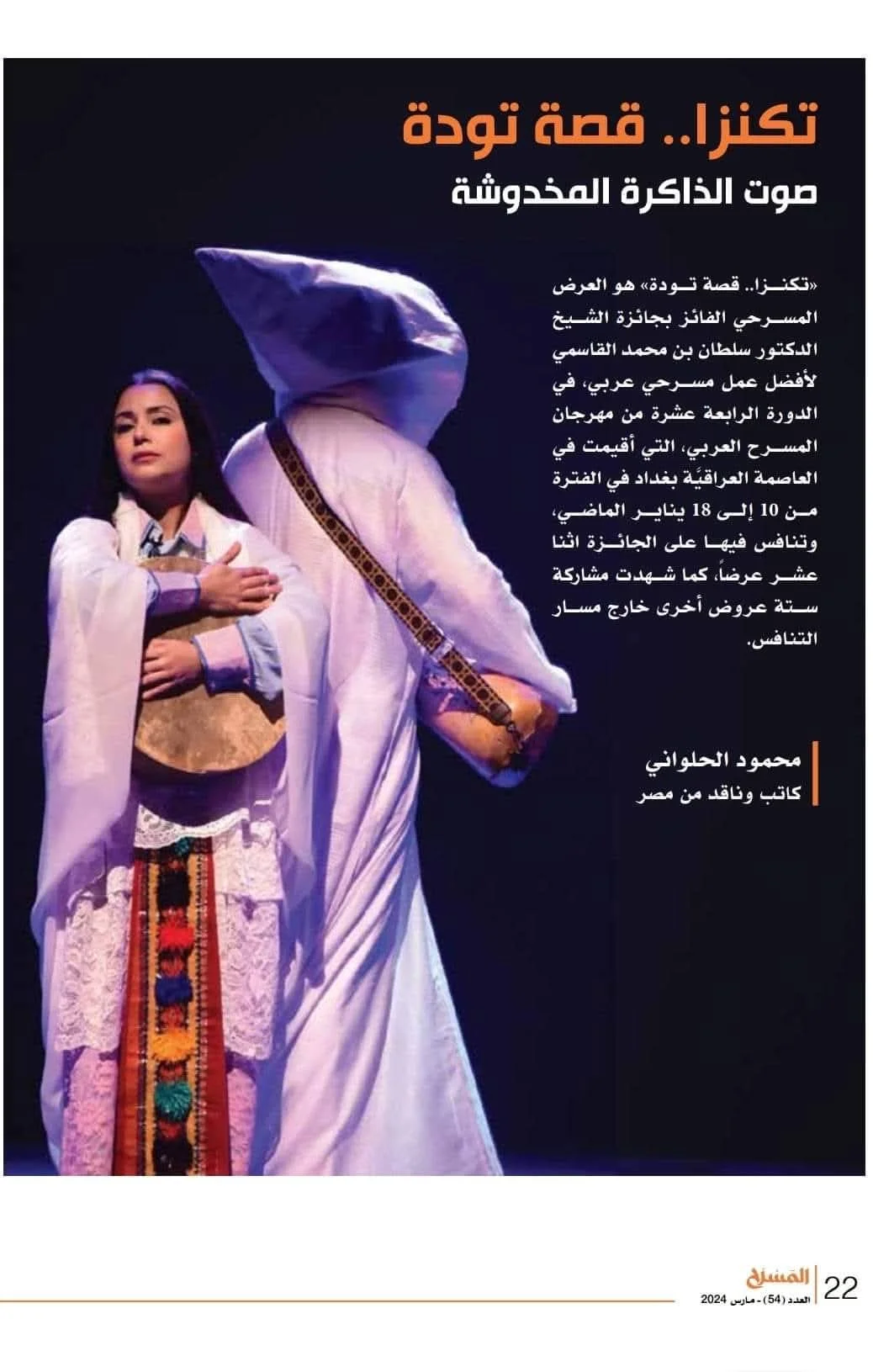
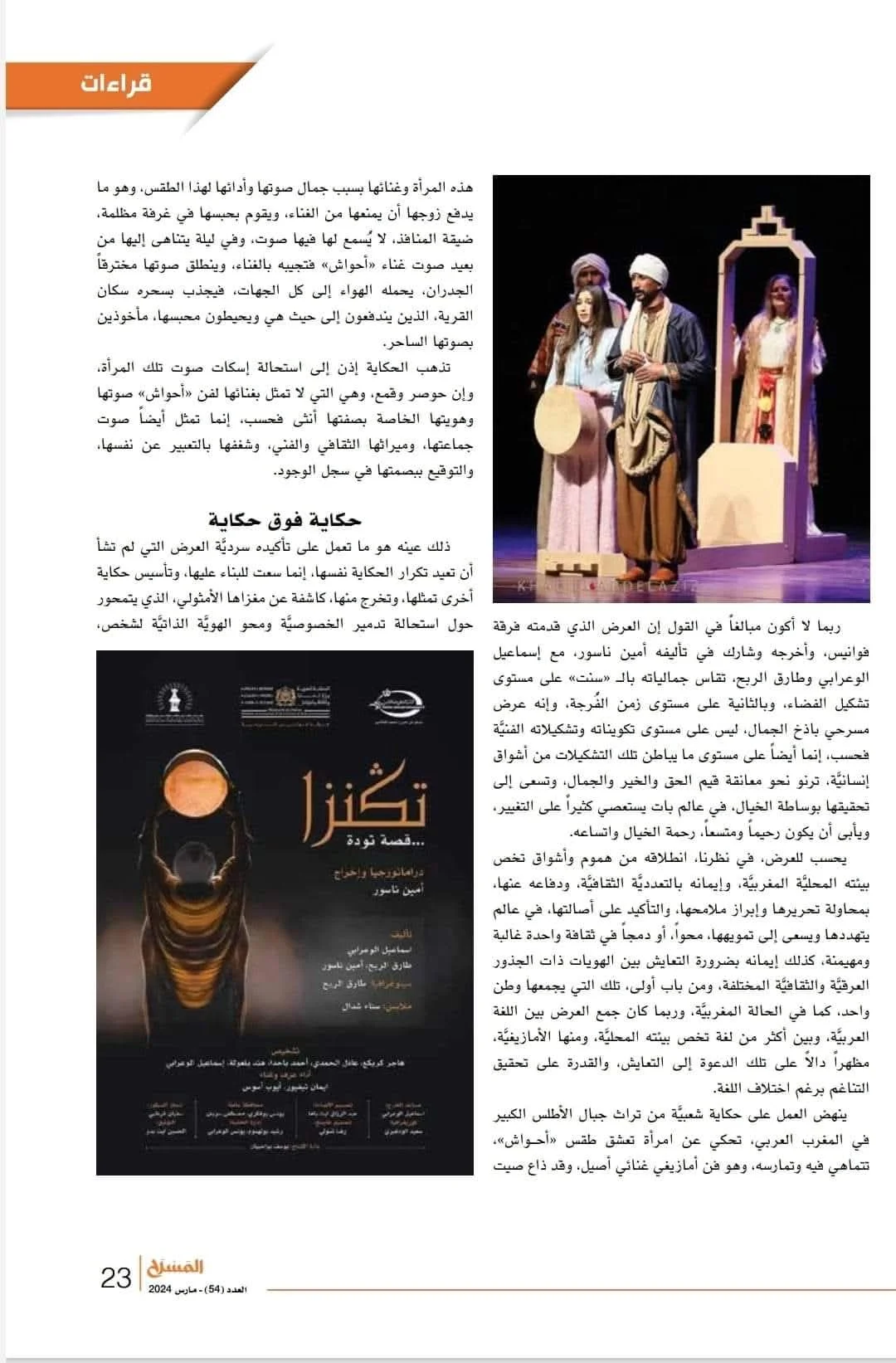
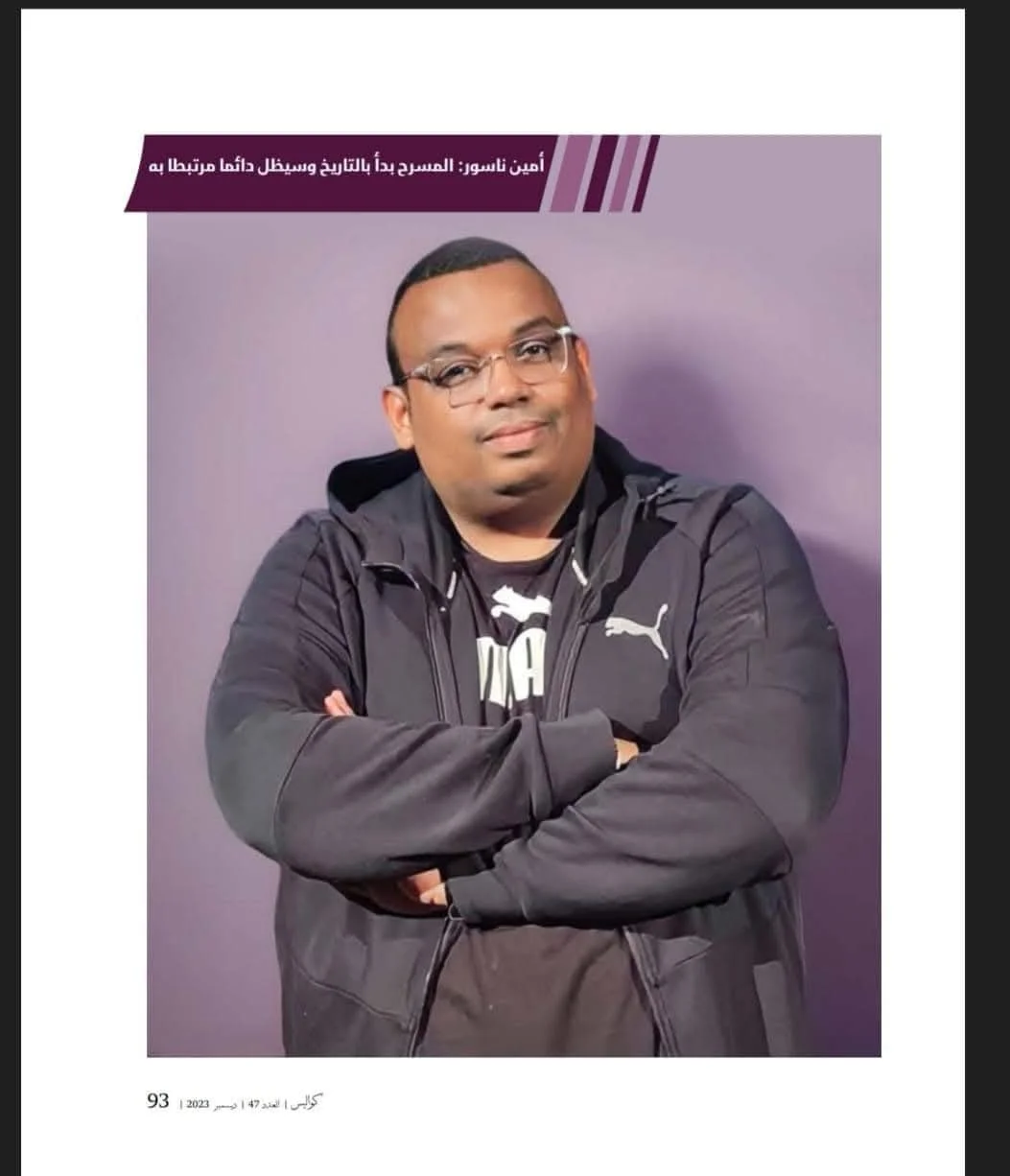
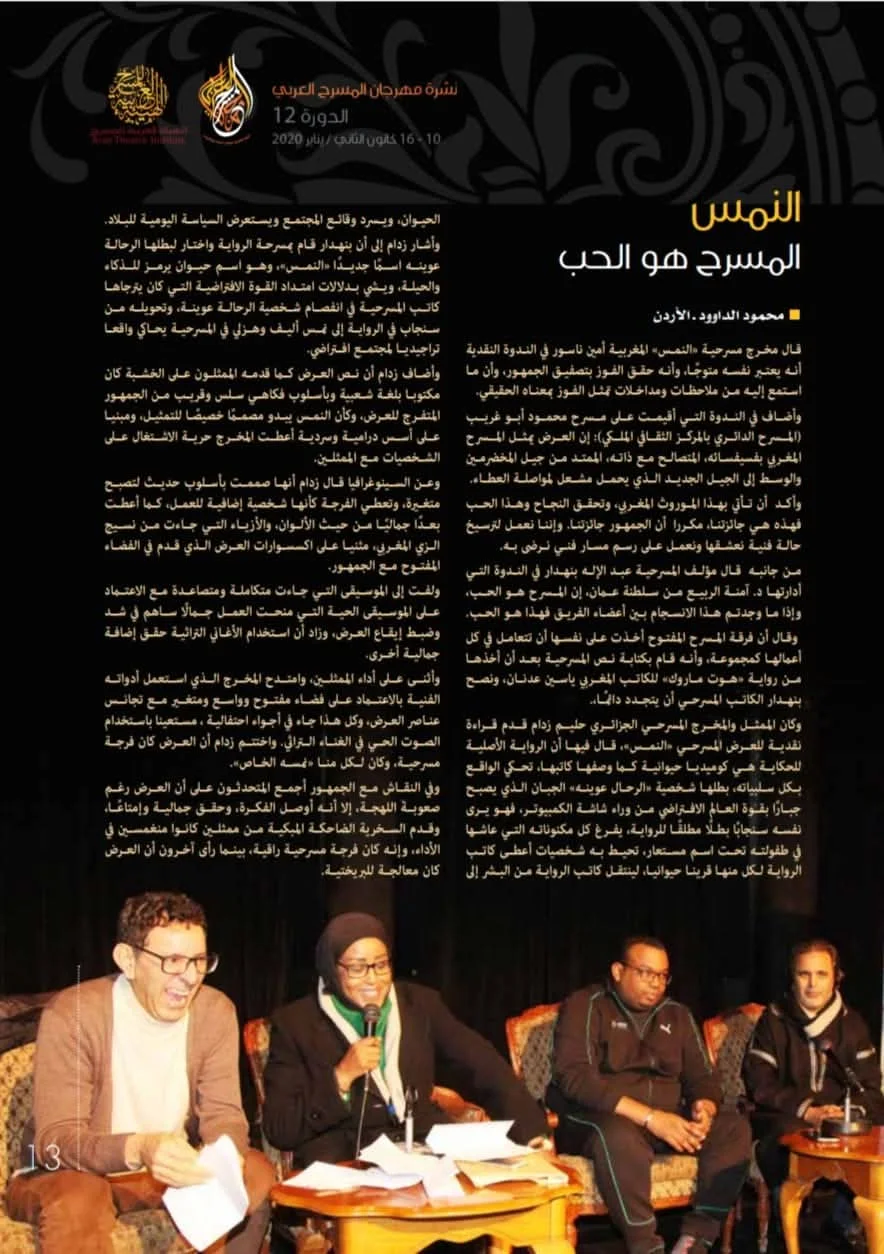
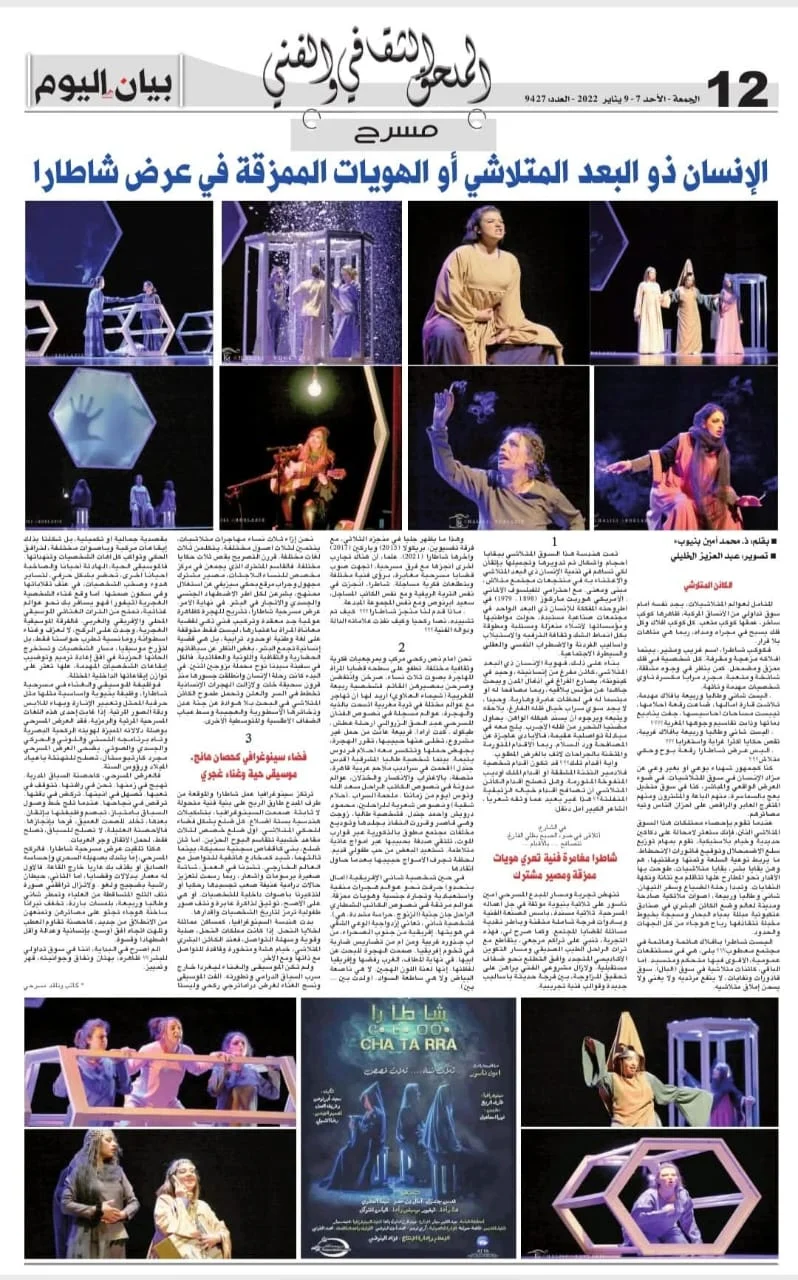
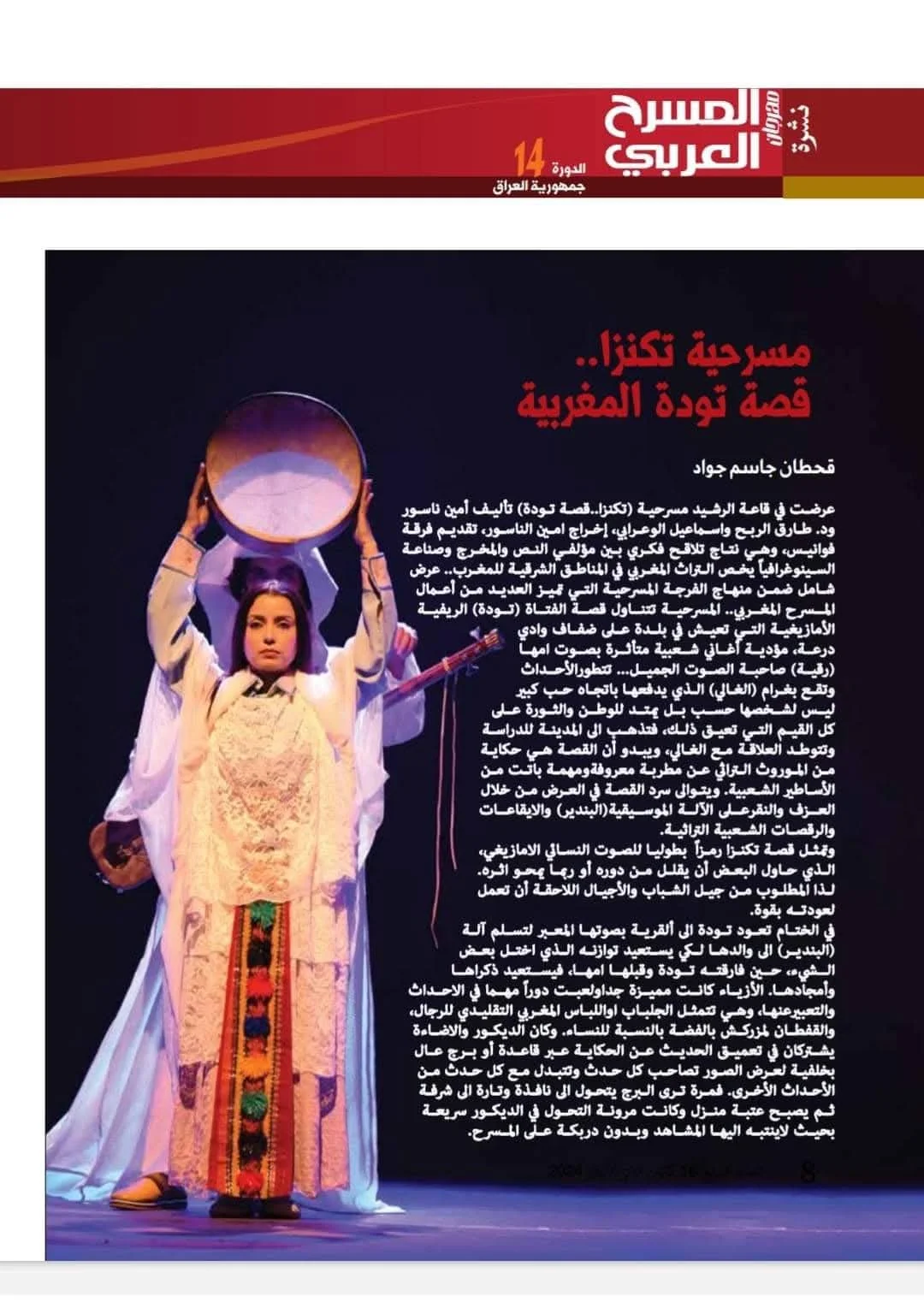
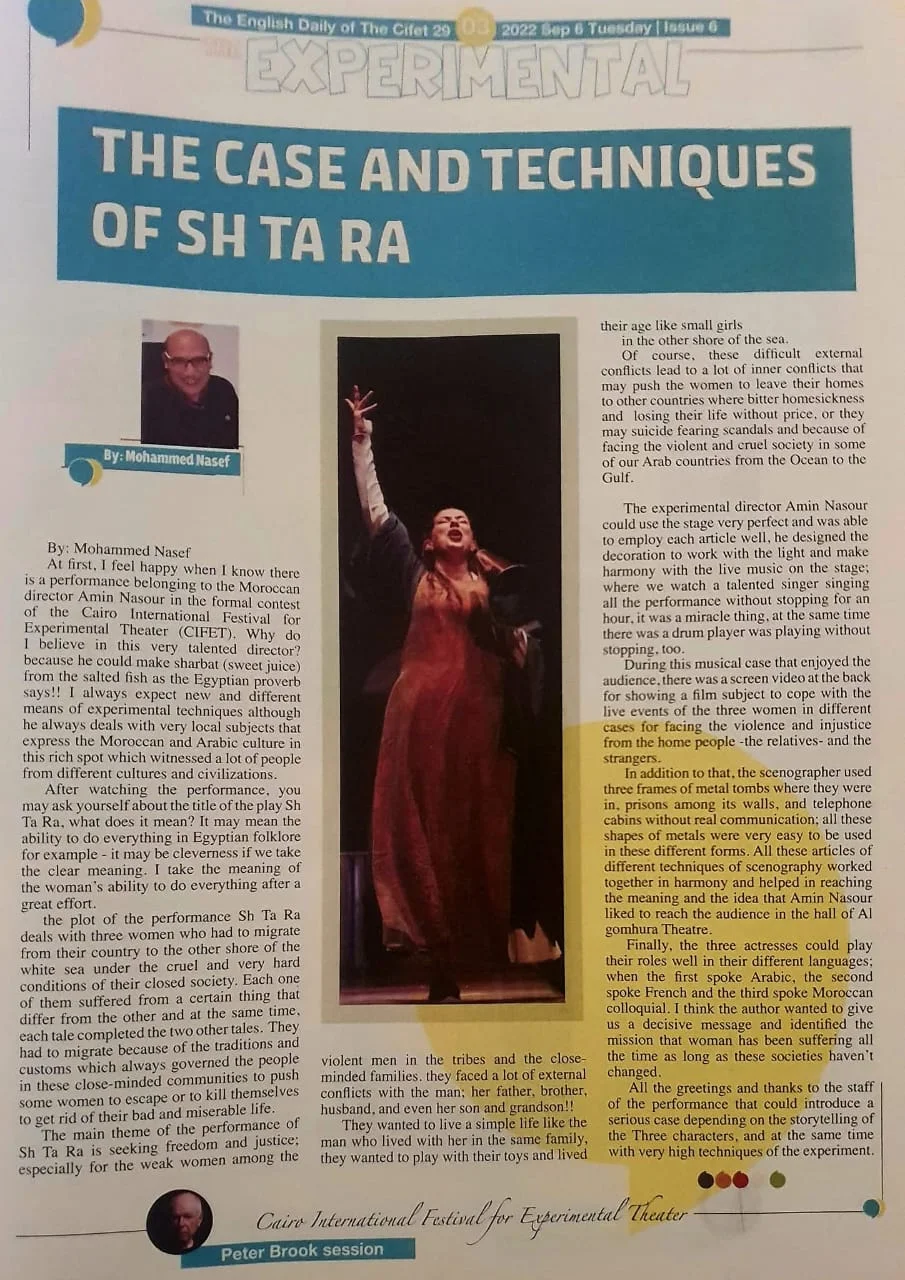
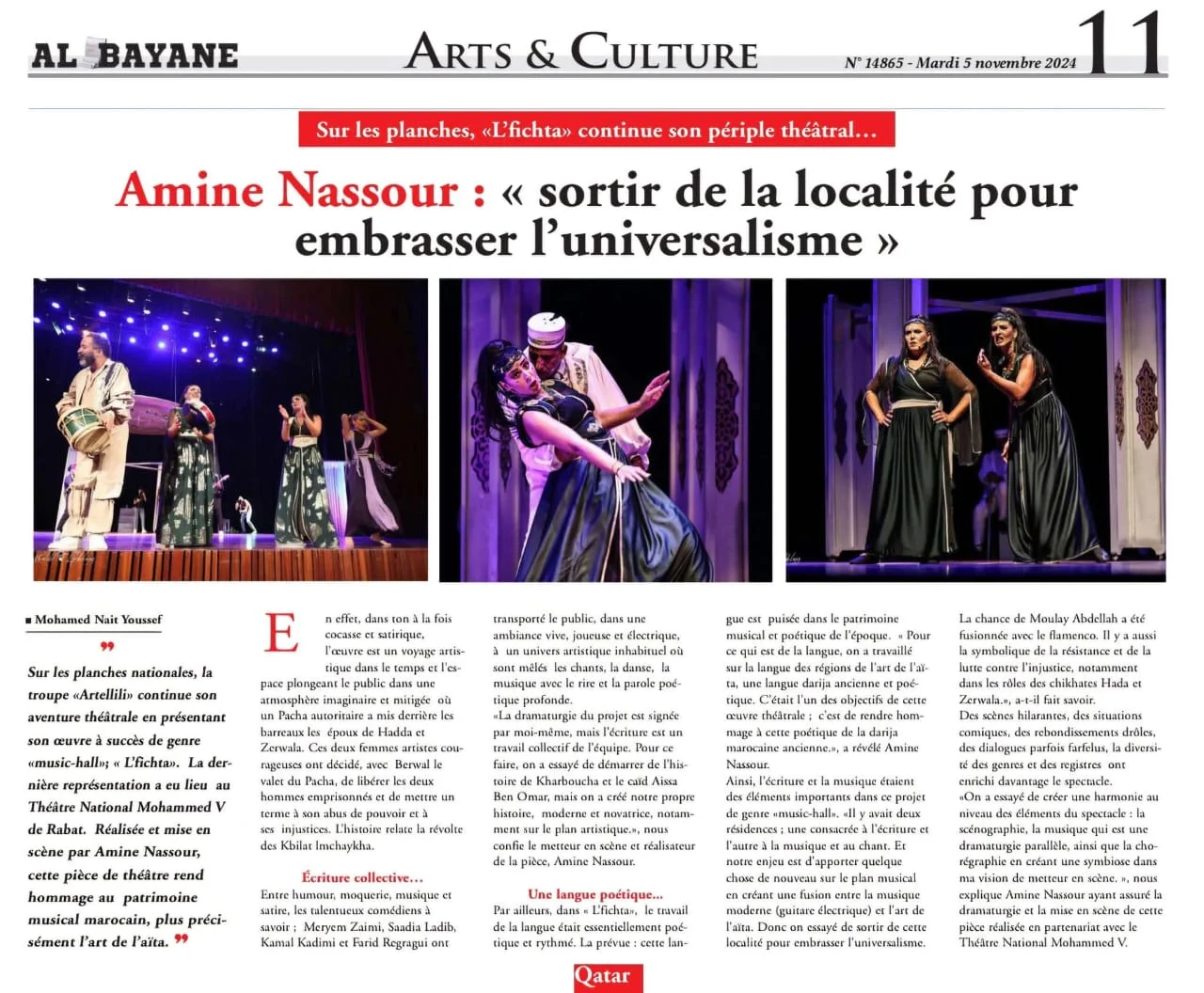
Testimonial
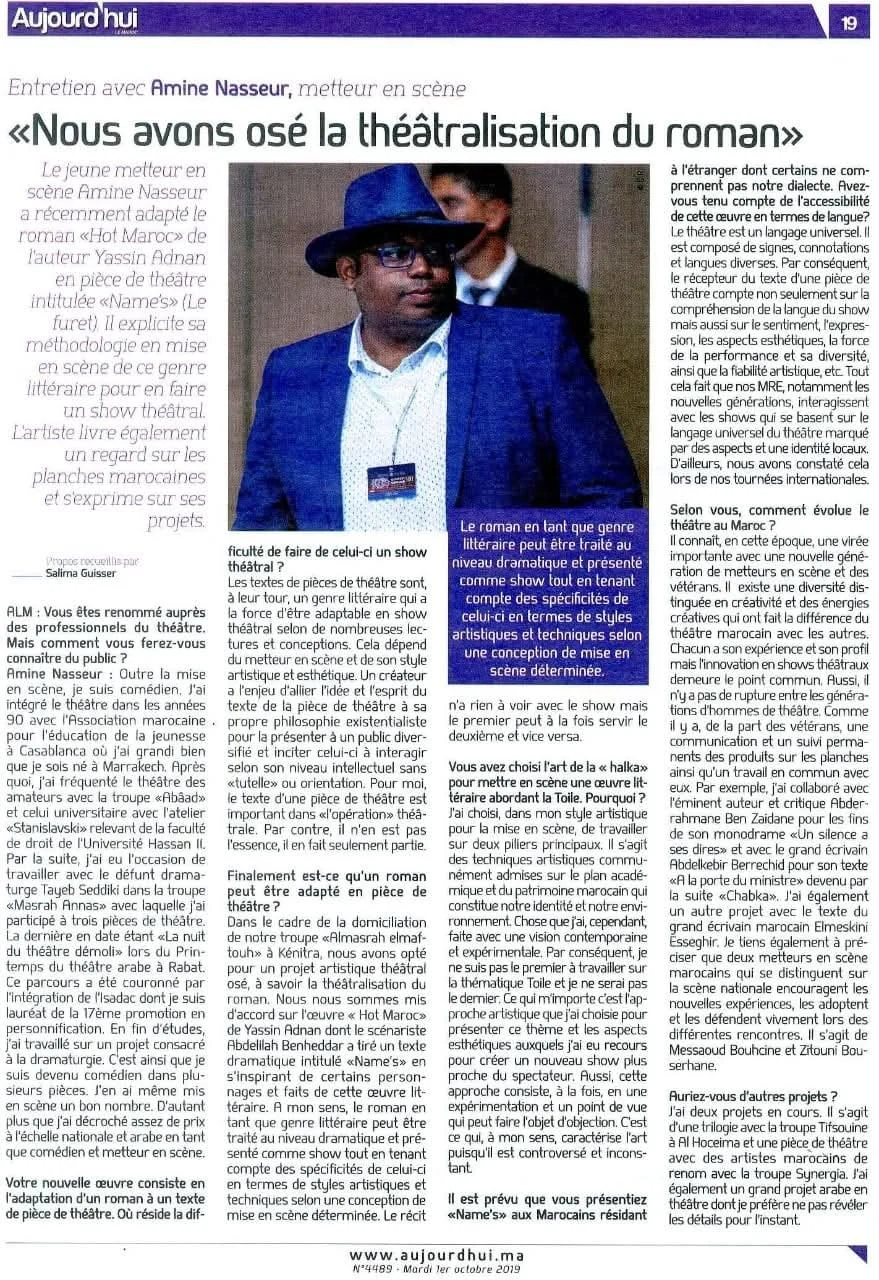
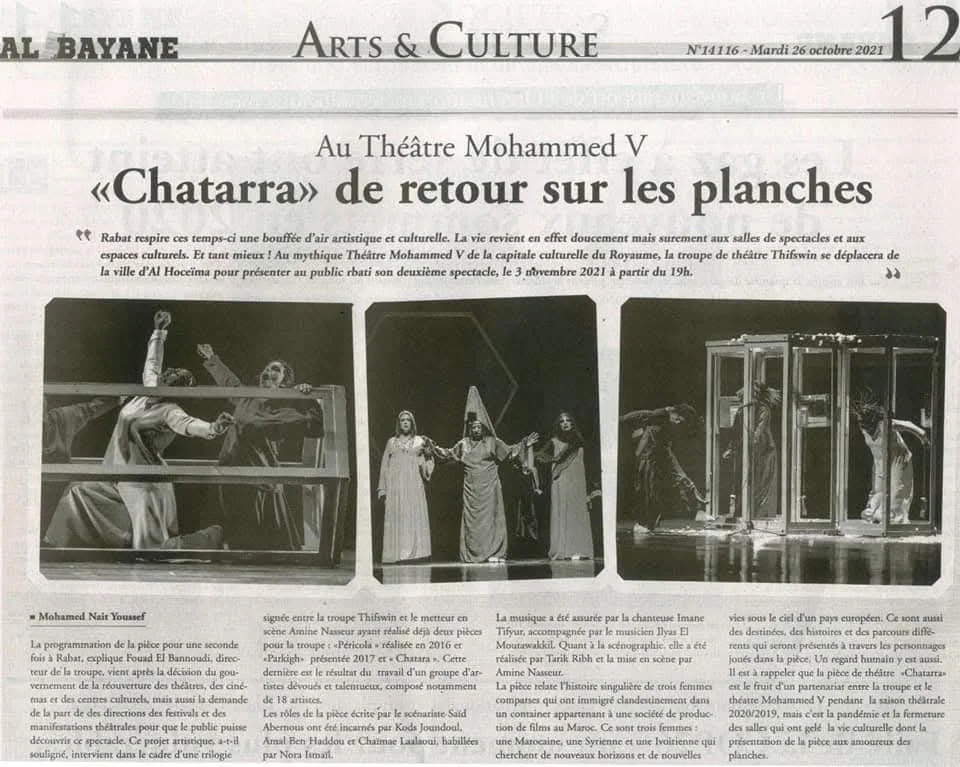
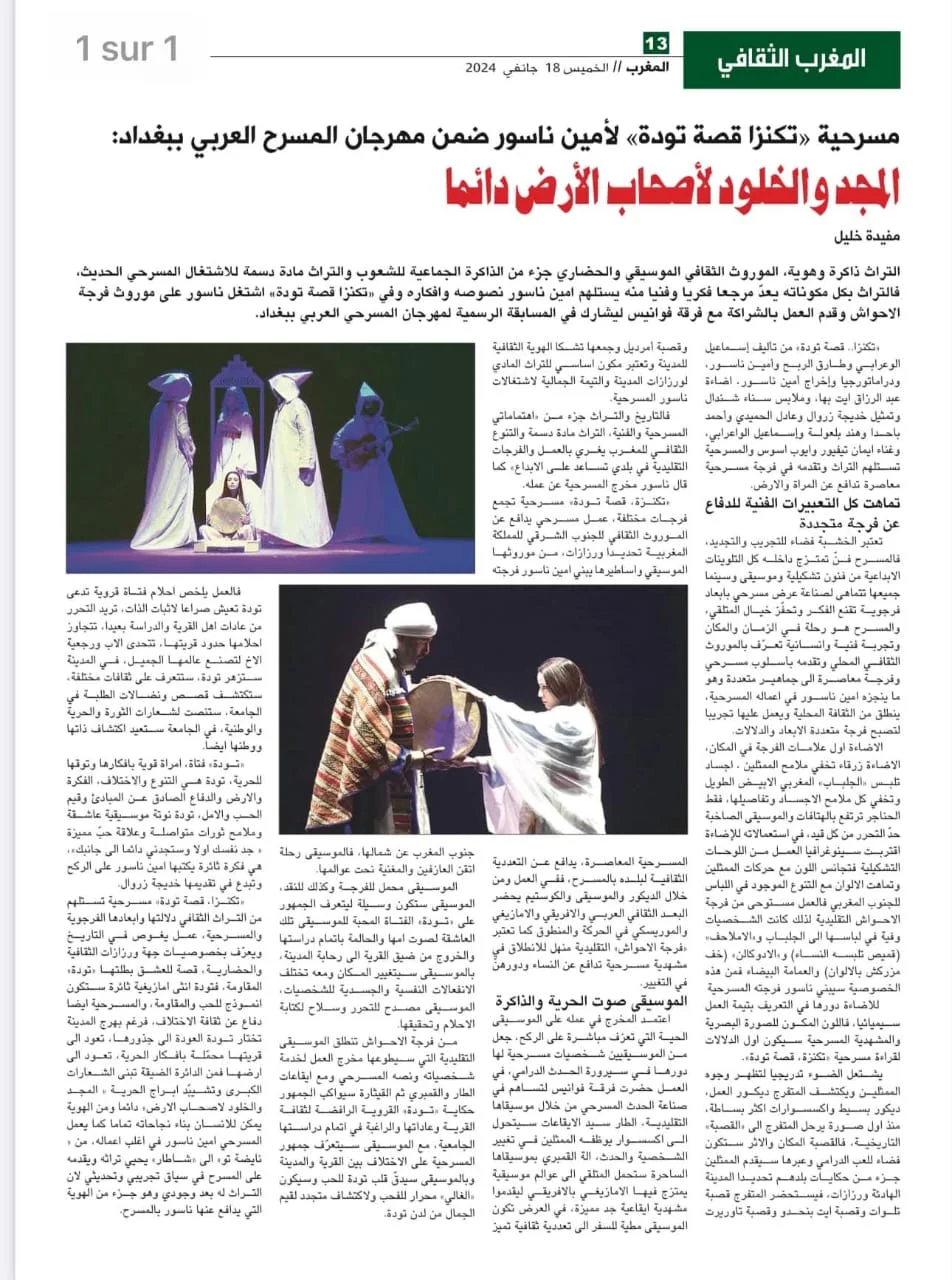
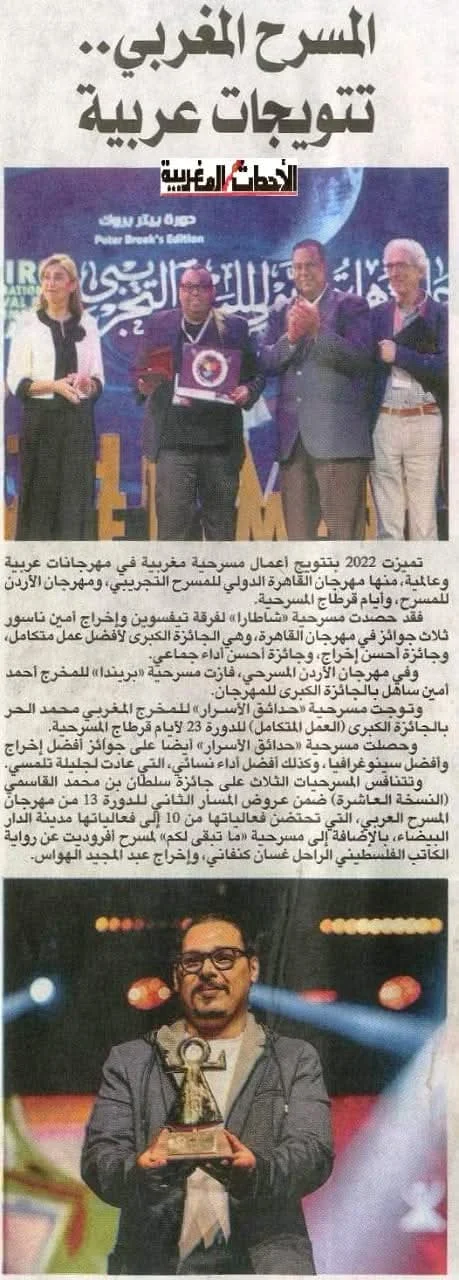
The Dramaturgical Weaving in the Theatre of Amine Nasseur
Dr. Khalid Amine · critic and scholar
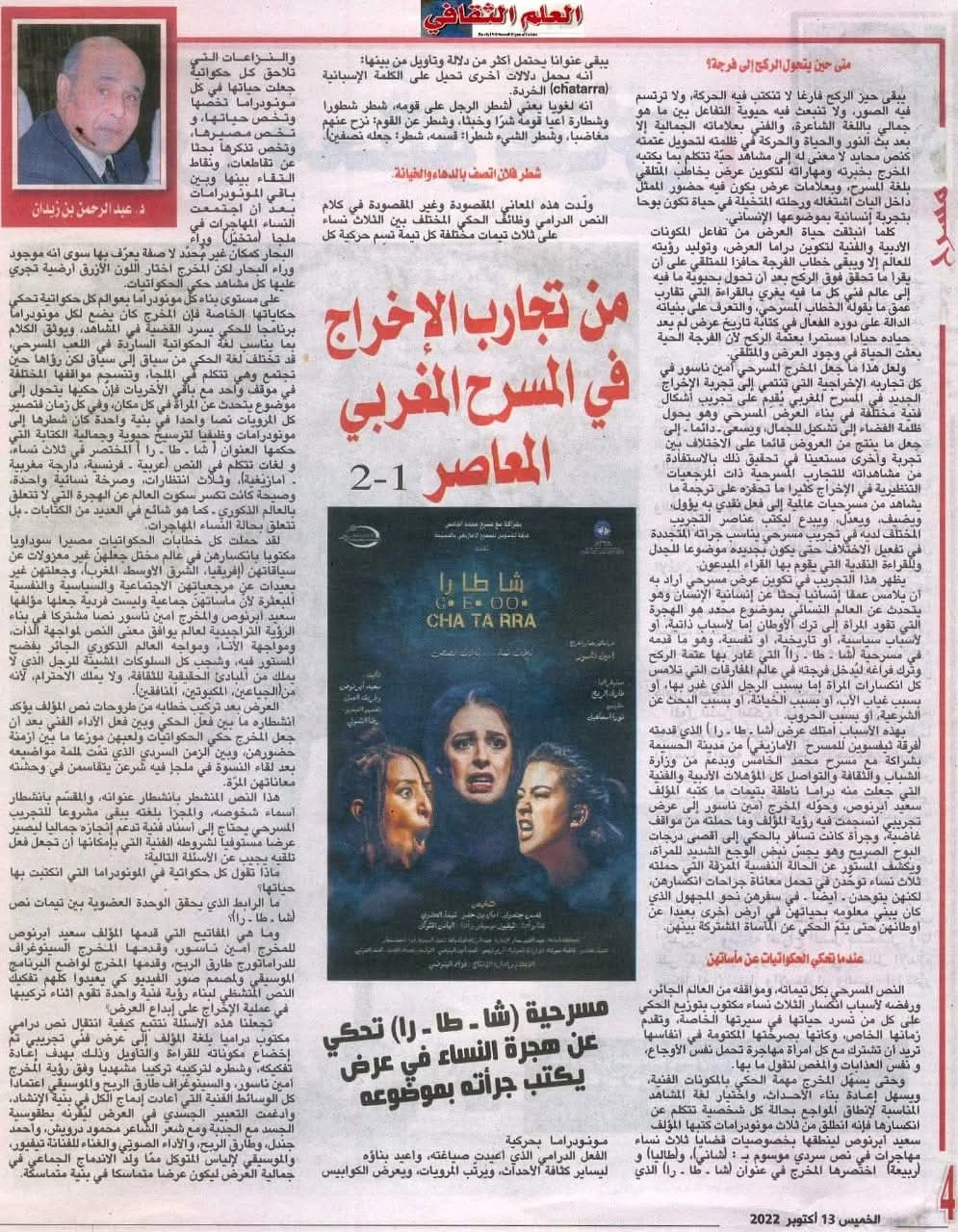
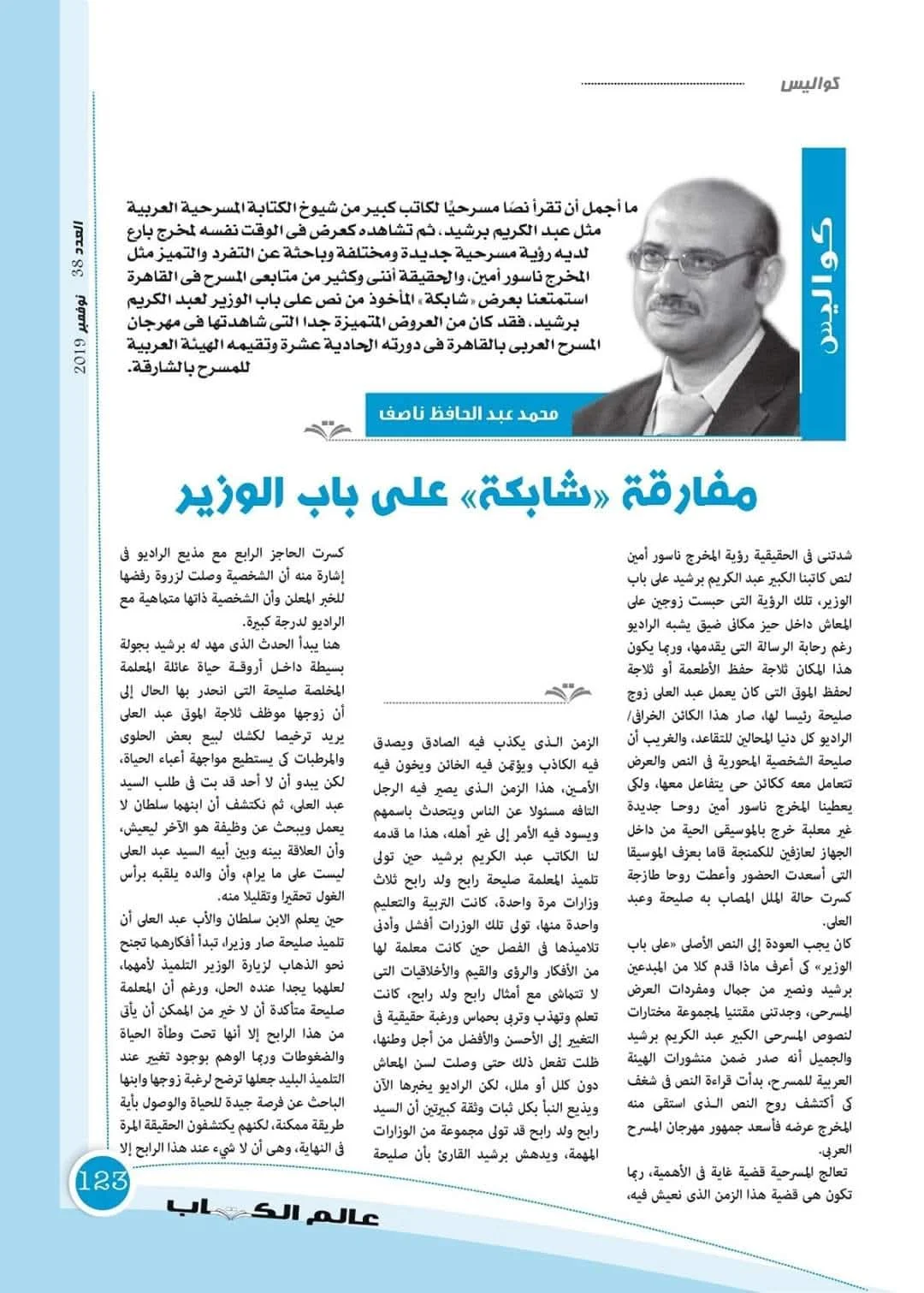
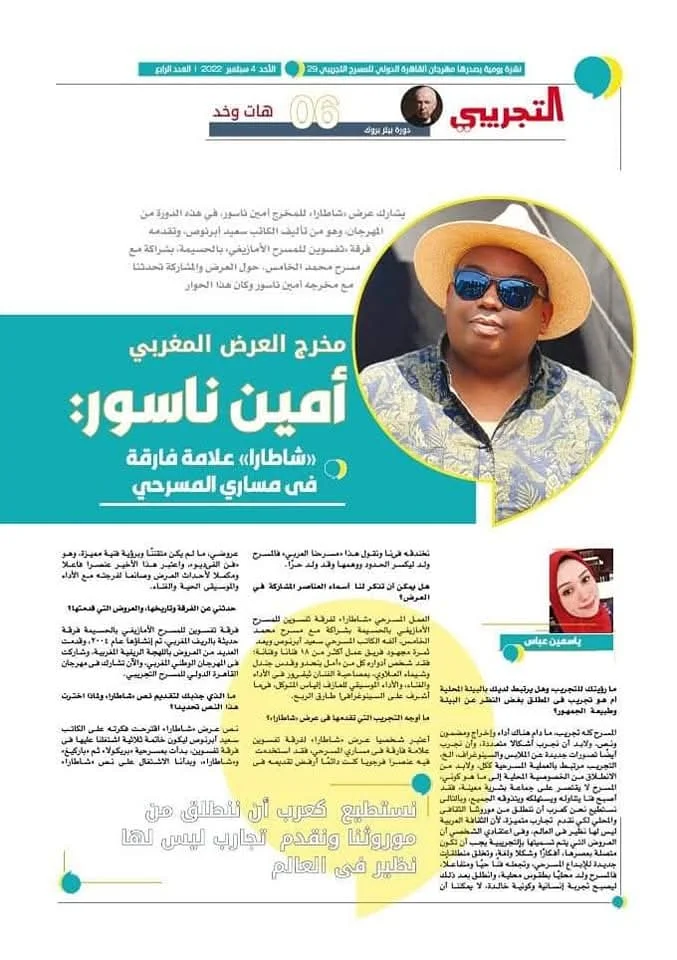
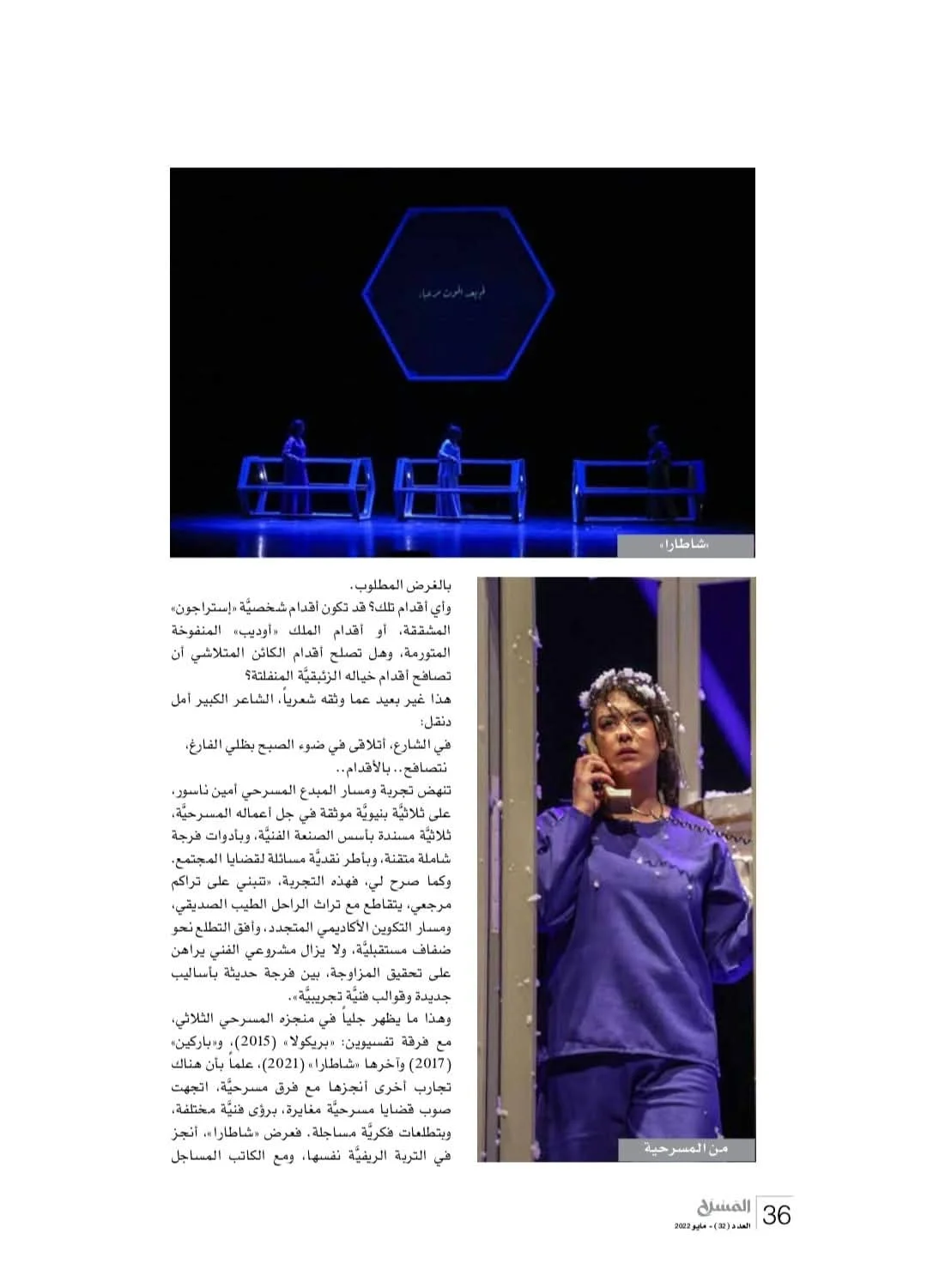
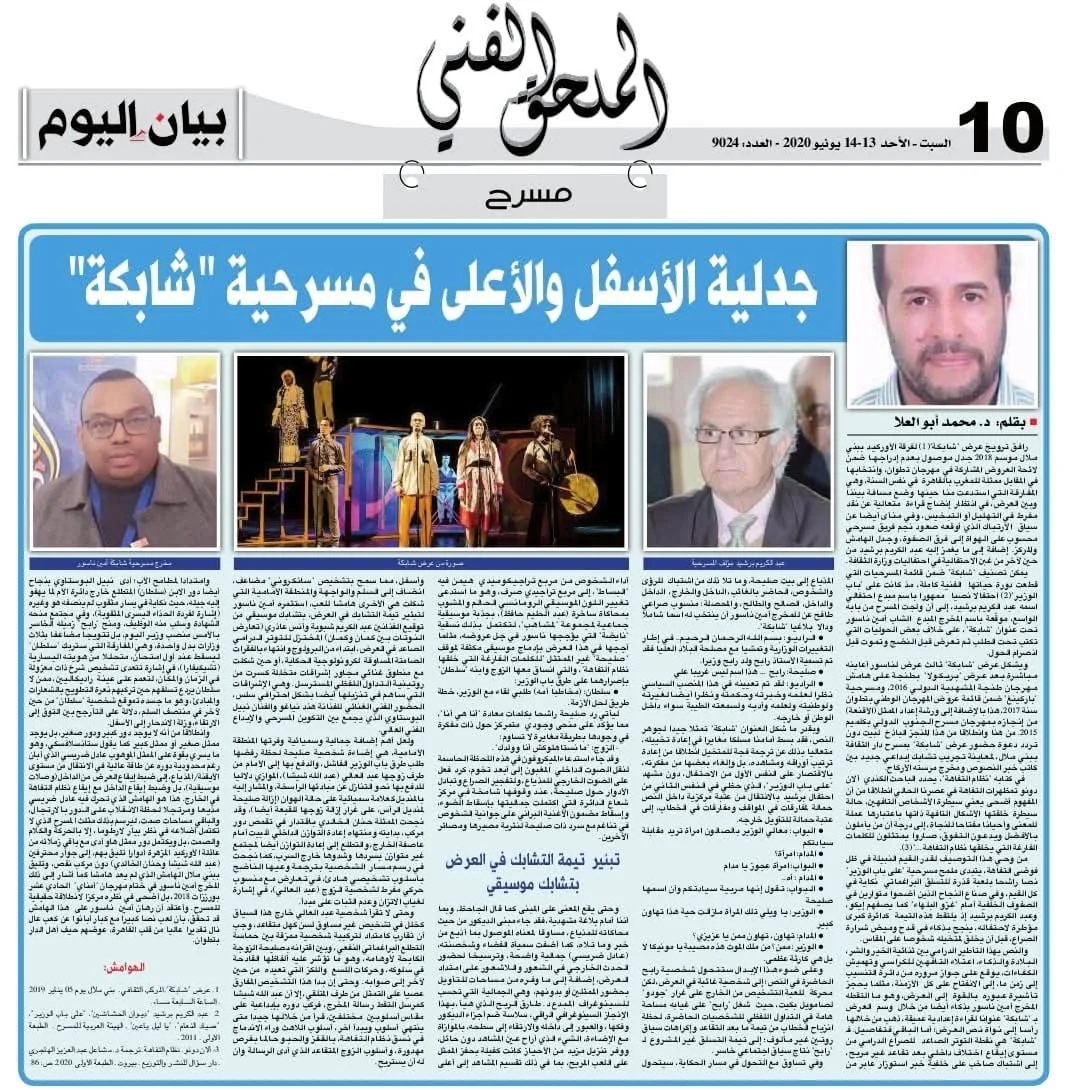
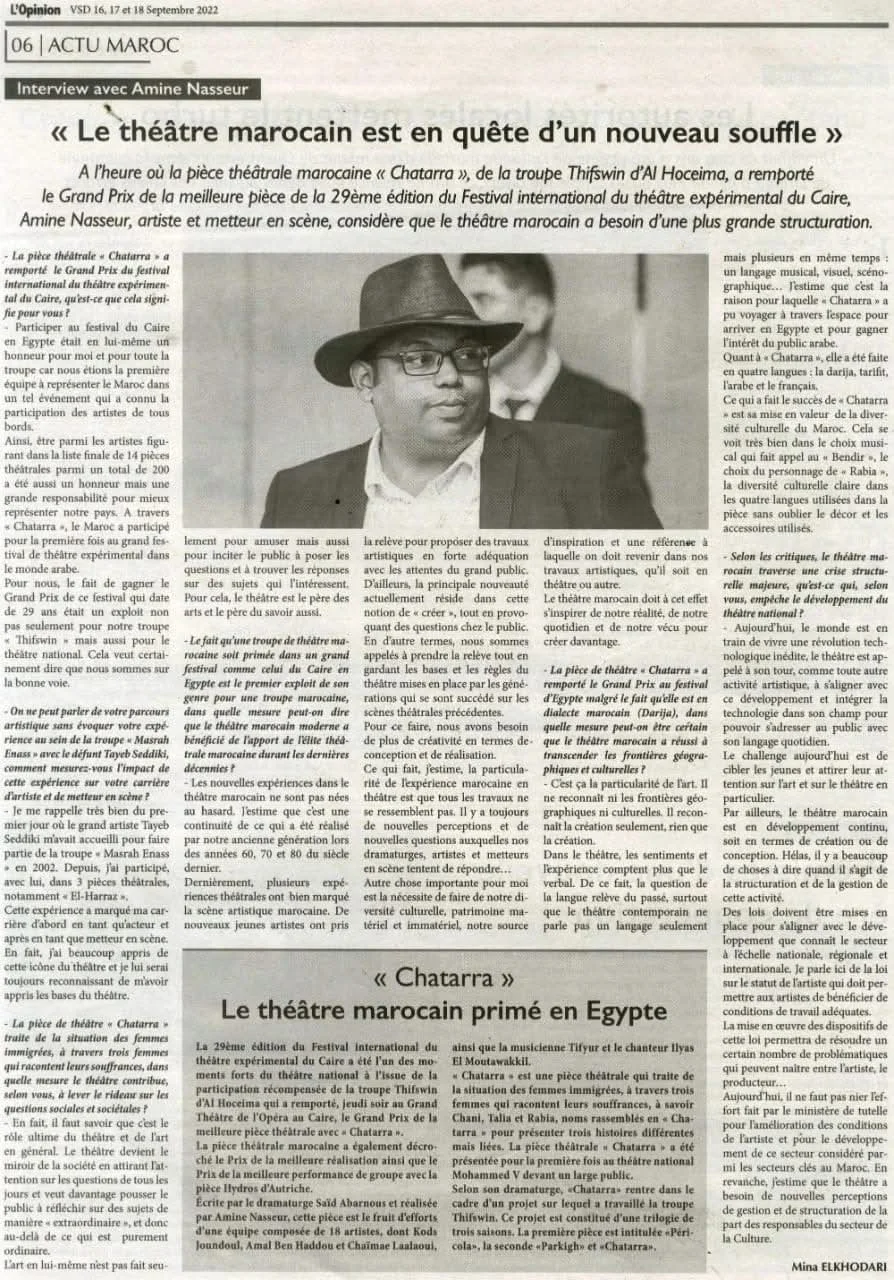
Over the past decade, Amine Nasseur has established himself as a major figure in contemporary Moroccan theatre. Renowned for his innovative stage direction and his commitment to experimentation, he continually explores new expressive forms that merge local, Arab, and universal influences. This text offers an analytical reading of Nasseur's theatrical journey, seeking to identify the key foundations that have shaped his artistic vision, practical and academic experience, and distinctive creative method. The aim is to understand how his work aspires to forge a uniquely Moroccan theatrical language — one nourished by the traditions of the music hall and a deep reflection on the weaving of scenic languages.
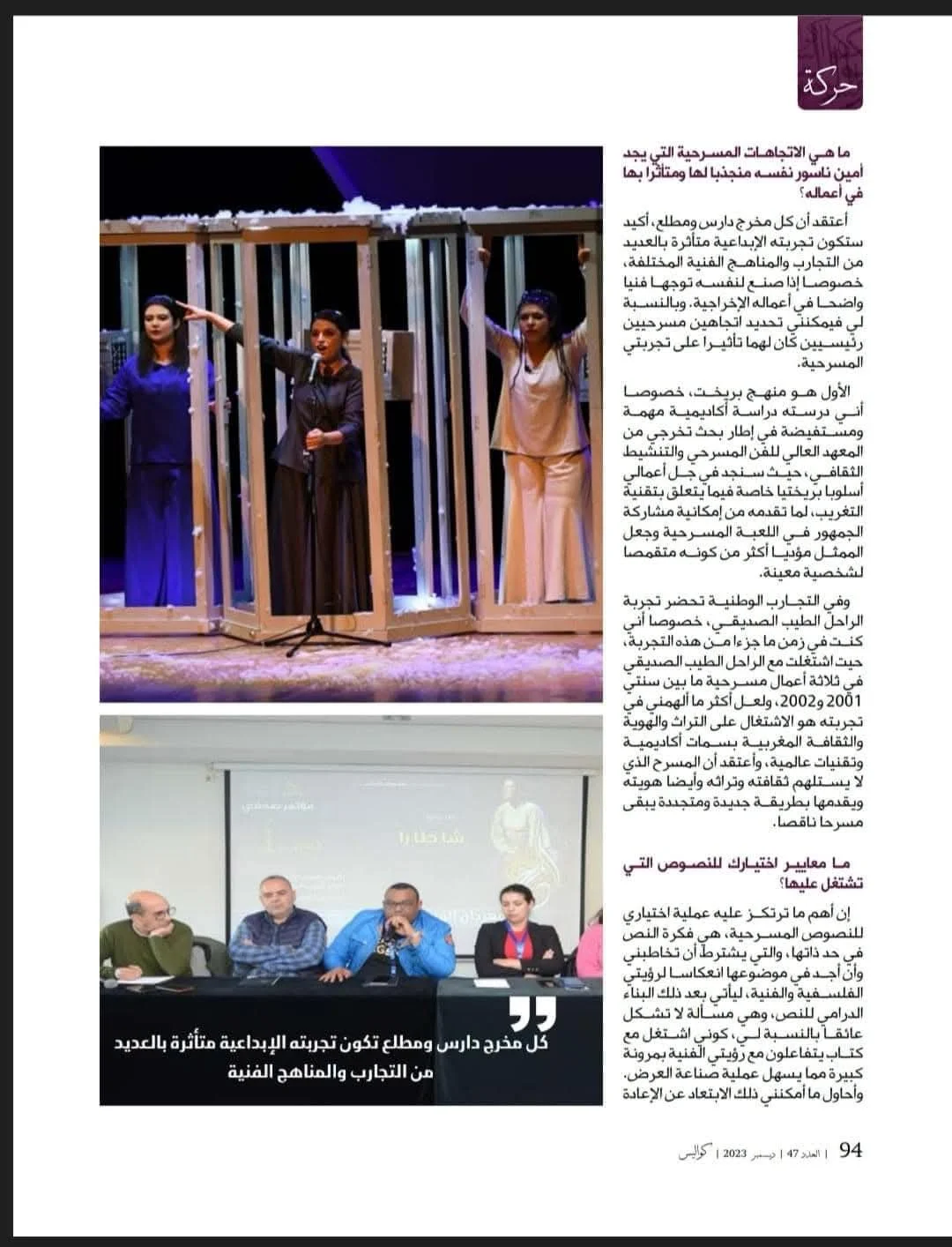
Nasseur's artistic practice is deeply embedded in current debates surrounding dramaturgical weaving and cultural identity in Morocco and the Arab world. His trajectory provides a privileged lens through which to examine the transformations of Moroccan theatre and its dialogue with global aesthetic currents. Three main sources have nourished his artistic vision: first, the legacy of Tayeb Saddiki, the pioneer of modern Moroccan theatre; second, the influence of Bertolt Brecht and his concept of epic theatre, especially the dramaturgical use of music; and third, a fascination with the music hall as a popular form capable of blending entertainment with social critique. This interlacing of Moroccan depth, European structure, and popular vitality reveals Nasseur's search for a hybrid theatrical language — one able to reach diverse audiences while addressing contemporary issues through inventive stage devices.
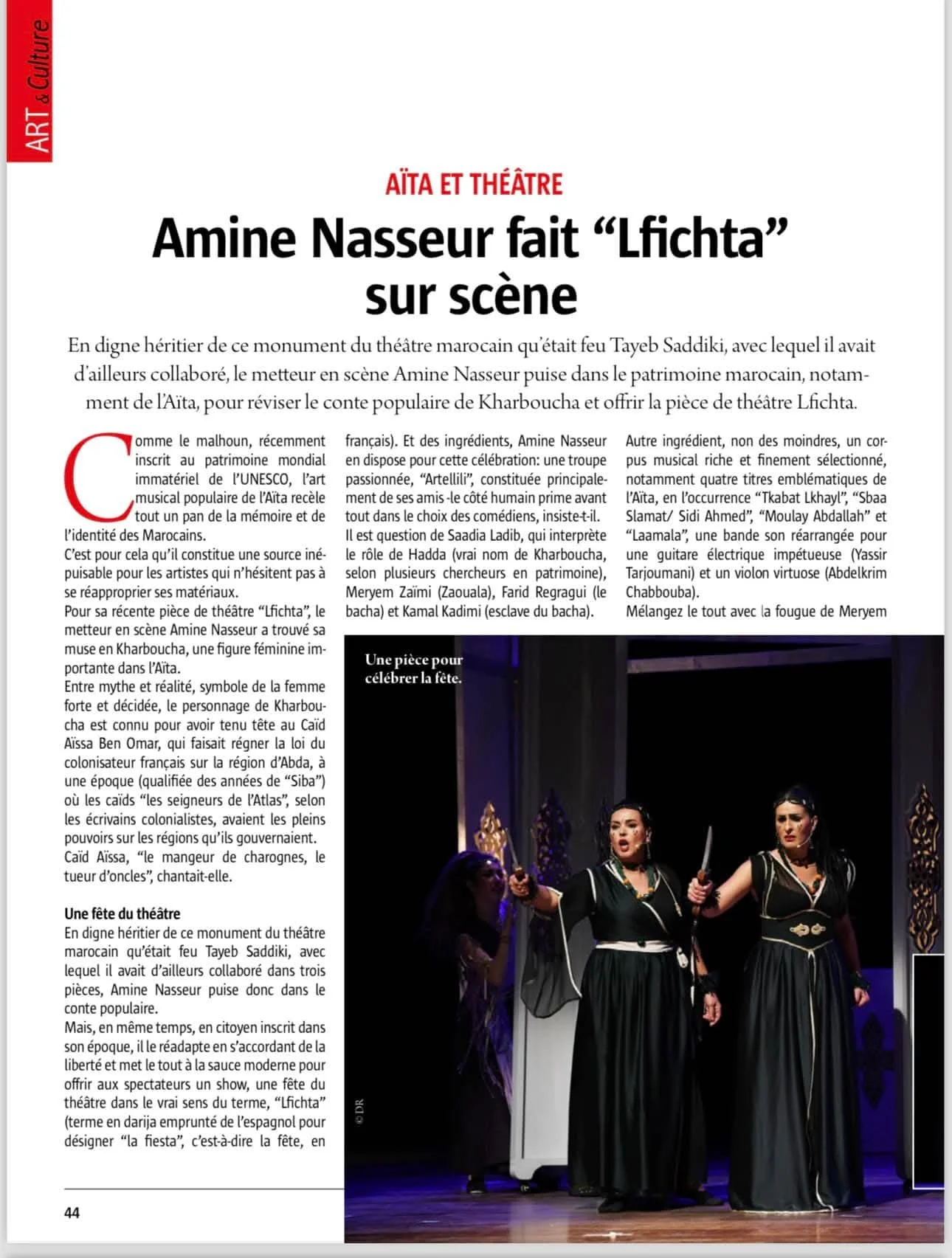
Amine Nasseur defines himself as an heir to Tayeb Saddiki's school, with whom he collaborated within the troupe Masrah Ennas, notably during the revival of El Harraz in its second version. This decisive experience allowed him to master both performance and direction, while cultivating a keen awareness of the necessity of a theatre in dialogue with people's lived realities. His belonging to this lineage expresses both fidelity to the spirit of the master and a desire to transcend it — a dialectic in which continuity is nourished by rupture. For Nasseur, the theatrical event is a weaving of two essential components: the idea of the text — rather than the text itself — and music, conceived as a source of inspiration and performative energy. This conception, rooted in Saddiki's aesthetics, emerges clearly in El Harraz's televised version, where musical dramaturgy becomes the driving force of meaning.
It is therefore relevant to recall Saddiki's later project, The Entertaining Carpet (El Bassat Attarfihi), in which he challenged the classical notion of thematic unity in dramatic writing. By proposing a "kashkoul theatre" — a collage of short, diverse pieces, sometimes comic, musical, danced, or political — Saddiki envisioned a free and total form of theatre embracing the plurality of human expression. The metaphor of the kashkoul, drawn from the beggar's bowl, symbolizes a theatre of multiple functions, open to different registers and values. Nasseur extends this vision by developing a global theatre, a space of convergence between music, movement, and speech — where fragmentation becomes a principle of unity and discontinuity a source of coherence.
On a theoretical level, Nasseur was deeply influenced by Bertolt Brecht, especially through The Threepenny Opera. There, he found a model for the critical integration of music into dramaturgy. In Brecht's vision, music is not a mere decorative element but a tool of distancing and reflection. Nasseur adapts this conception to his own context: music becomes a space of tension, commentary, and meaning — a full-fledged actor in the performance.
The third pillar of his approach lies in his attraction to the music hall, a form of spectacle where songs, dances, sketches, and improvisations alternate in direct interaction with the audience. This genre, through its popular accessibility, fascinates Nasseur because it reconciles artistic expression with social critique. It resonates strongly with Moroccan traditional forms such as the halqa and frija du bassat, where speech, song, and satire coexist in a shared and improvisational dynamic. Both universes — the European music hall and the Moroccan popular performance — embody the same will to speak to the people, to celebrate life, and to reflect upon society through laughter, rhythm, and movement.
Nasseur's experience with Masrah Ennas was a defining moment in his artistic evolution. His graduation project — combining irony, deconstruction of ideals, and music — represented a foundational stage in the development of his aesthetic. The use of irony as a critical tool, the fragmentation of discourse, and the expressive power of sound revealed a clear vision: a theatre that questions, provokes, and refuses the passivity of the gaze. From this emerged Nasseur's concept of a "free performance", liberated from textual constraints and conventional dramatic structures.
In this free theatre, the performance is no longer a mere illustration of a pre-written text but a living weaving of multiple writings. The actor becomes the author of his own bodily and vocal language; the scenographer writes through space, light, and matter; the musician composes a sonic text in constant dialogue with the rhythm of action; and the director, far from dominating creation, becomes its coordinator and catalyst. This collective process echoes Hans-Thies Lehmann's conception of postdramatic theatre, in which the stage functions as a space of co-writing, interaction, and perpetual rewriting.
Amine Nasseur's awareness of the evolution of today's audiences reflects his acute sense of cultural and social change. The contemporary spectator, more mobile and more critical, seeks an immersive, dynamic, and multisensory experience. Thus, Nasseur places live music, rhythm, and gesture at the beating heart of performance — not as accompaniment, but as a core dramaturgical structure. His theatre, simultaneously rooted and cosmopolitan, strives to create a total art form where sound, body, and word resonate in continuous dialogue.
Ultimately, Nasseur's trajectory illustrates the birth of a dramaturgy of weaving: an art of encounter between heritages, a space of intersection between the popular and the erudite, memory and modernity. His work stands as a living experimentation of Moroccan theatre in its most vital and universal dimension.